

Think of the newest Cadillac supersedan as a four-door Corvette Think of the CTS-V as a more practical Corvette Z06, one with four doors. You already know the bare bones about this car: the same 6.2-liter supercharged V8 as the Corvette Z06 (minus the dry sump lubrication), making 640 SAE-certified hp and 630 SAE-certified lb-ft of torque sent to the rear wheels through a Hydramatic 8L90 eight-speed automatic and an electronic limited-slip diff; magnetic ride control at all four corners; ZF electric power steering that varies the level of assist depending on demand and conditions; traction control with more settings than a bridal registry; and a nice Cadillac-designed exterior that won’t be mistaken for anything else on Earth. What’s It Like To Drive? Oh man. First of all, look at the numbers: 0-60 in 3.7 seconds (good!), quarter mile in 11.6 seconds at 126 mph (very good!), 1.00 g lateral acceleration (outstanding!) , top speed 200 mph (whaaaaa???). This thing will go 200 mph right out the showroom door… 201.8 to be exact, which is what Cadillac engineer Brian Wallace did at the Transportation Research Center in Ohio. All for a sticker price of $84,990. If you went just by those numbers alone, the coming CTS-V outshines the competitors in almost every category. If you go by all the parameters that make a car a success, the CTS-V might win there, too. To show us how all that performance potential stacked up on the road, Cadillac took us to Road America, a horsepower track if ever there was one, and horsepower is what this car has in spades, as well as deuces, clubs and whatever else they measure horsepower in. Our first session behind the wheel came, not at the track, but on the road to Road America, a wide Interstate nearly devoid of traffic, except for a couple trucks and a few citizen sedans all cowed into submission by what was no doubt draconian enforcement of the ridiculous speed laws in this state (55 mph???). We got our chance way out in the middle of corn- and dairy farm paradise when our co-driver pulled off the Interstate for the driver swap. We slithered into the tightly bolstered bucket seat, cinched-down the seat belt and stared ahead. We had to cross a road perpendicular to the Interstate then go down the onramp and back up to the highway. The road might have been a little bumpy, too. So naturally we disabled all traction assistance and floored the thing. Yow! This car has 640 hp all right, and it felt like we were putting every single one of them down to the pavement right then and there. The rear end wandered around a little with all that power, almost scarily, as we briefly contemplated being known forever as, “Oh yeah, that idiot who wiped out the first CTS-V.” But a little counter steering -- without lifting -- and some barely noticeable assist from the active traction control kept it in line and off we whooshed, down the onramp at what felt like about Warp Factor 6. This is no ordinary domestic performance sedan. CTS V looks good when parked, tooo. Indeed, Cadillac proudly displayed a little chart comparing this car to its main competitors: the BMW M5 and the Mercedes AMG E63. According to the chart it had: more power, more torque, higher top speed (again, 200 mph!), quicker acceleration, and for all we knew, a higher grade-point average and did better in singles bars than those Europeans. How does Cadillac do all that? Apparently it was through what is known as “engineering.” The 2016 CTS-V sits on the all-new Alpha platform shared with the ATS and the coming CT6. The platform itself has been significantly strengthened in this application for more driving precision. Structurally the biggest change is a big aluminum plate bolted underneath the front end called a shear panel. Other Alpha-platformed cars don’t get the shear panel. Nor do they get the CTS-V’s strut tower brace or the braces that connect the motor rail to the engine cradle. “All this is an effort to triangulate the front of the car,” said chief engineer Tony Roma. “It’s as stiff as it could possibly be.” Engineers also retuned all 10 bushings in the front, replacing six of them with ball joints. “Any unwanted toe change would really move a car like this around with such a big sticky tire,” Roma explained, referring to the CTS-V’s front 265/35ZR19 and rear 295/30ZR19 Michelin Pilot Super Sport summer tires. There was interesting engineering in the rear, too. The half shafts are of unequal lengths to eliminate axle tramp under acceleration. The electronic limited-slip differential can go from open to “essentially locked,” depending on what you need. “It understands if you’re asking the car for a certain amount of aggression,” said Roma. And Brembo cooked up a bespoke set of steel disc brakes: 15.4 inches in front and 14.4 rear. It has the same five-mode traction control used on Camaro and Corvette models, too. CTS V 6.2-liter V8 makes 640 hp We kept all of this in mind at Road America. It took us a couple laps (and some pointers from an engineer) to realize that we couldn’t shift quicker than the transmission in automatic could shift. We maybe would have liked some downshifts sooner, but these were soon enough. The car, not to beat this into the ground, has horsepower. On RA’s long, long front straight, we had it floored just before we apexed the last corner entering the straight and hit 153 mph at the “suggested braking point.” We could have stayed on it longer, hit 155 and still made the next corner, but what’s 2 mph between friends? The car swayed just a little under heavy braking, and also under floored acceleration, but never scarily. Once you click on track mode, push the traction control button twice in five seconds and you’re in Performance Traction Management, which is where you want to be at Road America. There are five settings here and we kept it in number three, which still had a stability intervention component. We only noticed it a couple times intervening in the motorcycle chicane just before turn 10 as we braked into and powered out of that tight section of track. The steering was as precise as a sedan this big will likely get, and the body roll control was likewise solid. Otherwise, it was just a really fast sedan through all 15 turns. Given a few hundred more laps, we could have carried a lot more speed into Carousel and up through Kettle Bottoms, but as it was we had a great time. If it has a flaw as a track car, it’s weight. The CTS-V weighs 4,145 pounds, which is a little heavy to be flinging around on a racetrack. But just being able to fling this four-door sedan around on one of America’s great tracks in the first place is pretty amazing. Is this the view competitors will see? Do I Want It? Heck yeah, you want it. The thing we want to do now is line up a track day with this, the M5 and the AMG E63. Now that would be a fun day. America is on the grid in the luxury performance sedan contest. Via: http://autoweek.com/article/drive-reviews/2016-cadillac-cts-v-drive-review#ixzz3lH0hCrRo
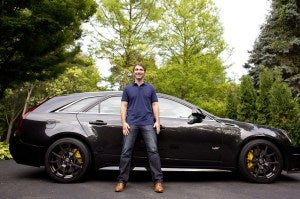
Cadillac CTS-V: The Speed Lover’s Station Wagon
Scott Bonato, 32, a senior client partner with Oracle from Franklin, Mich., on his 2013 Cadillac CTS-V Wagon, as told to A.J. Baime. My wife knew she’d married a car guy. I have a 1979 Trans Am, a 1957 Ford Fairlane, a 1982 DeLorean. We had a kid coming, and we needed a family car. I convinced her that, even though this car I wanted was out of our budget, it made sense. A station wagon with a five-star safety rating! What could be more family-friendly? I promised if we got it, I wouldn’t talk about getting another car for at least two years. That was the deal. What I didn’t tell her: The Cadillac CTS-V Wagon was the most powerful, high-performance American made station wagon money could buy—maybe ever. Not many were built, especially manuals like the one I wanted. In January 2013, I took home the CTS-V. (MSRP was north of $60,000, but there was some discounting and attractive financing.) Soon after, we brought our daughter home from the hospital in the wagon. There’s so much refinement engineered into this vehicle. My wife would drive it and have no idea what it was capable of. She wasn’t sold on the looks, but she liked the heated seats and how smooth and quiet it was. Then my buddies came over, and they were, like, “We can’t believe you let him have this nearly 200-mph car with a 556-horsepower, 6.2-liter, supercharged V8.” She realized she’d been completely fleeced. Now I keep my daughter’s baby seat in the wagon, and there’s room in the back for a pack ’n play. My only complaint: These wagons are hard to find, and if someone rear-ends me, how will I find another one? I guess that’s not really a complaint. I do occasionally drive the car spiritedly with my wife in it. She’s not a big fan of the acceleration capabilities. But she rolls with it pretty well. Contact A.J. Baime at facebook.com/ajbaime. Article via www.Wsj.com
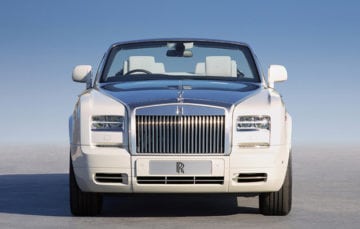
10 Years of a Luxury Line from Rolls-Royce
Click Here for Details
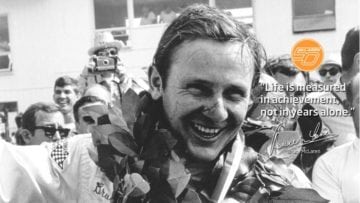
McLaren Prepares to Celebrate 50 Years
Click Here for Details
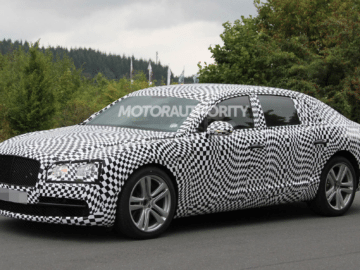
Bentley Teases its 2014 Continental Flying Spur
An all-new, updated Continental Flying Spur has been spotted recently. While Bentley has given the public a stylized sketch and a short video teaser, neither reveal much extensive detail about the vehicle. Things we have noticed, however, include a revised greenhouse featuring a completely new C-pillar, a more pronounced beltline, and a new fender vent. The V-8-powered Flying Spur is expected to equal the 500 horsepower and 487 pound-feet of torque of the Continental GT V8, while W-12 models should get 552 horsepower or more. Both models will have four-wheel drive and an eight-speed automatic transmission with column-mounted paddle shifters. We're itching for more information, but we can expect live photos and details to be revealed at the 2013 Geneva Motor Show.
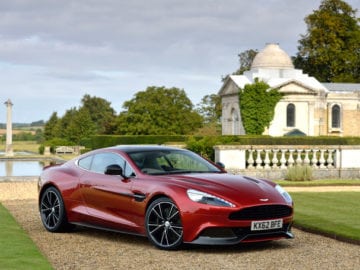
Aston Martin Vanquish: Most Beautiful Supercar of the Year
The Aston Martin Vanquish won the award for “The most beautiful Supercar of the Year” at The Festival Automobile International in Paris this week. The super GT has already been known for collecting numerous awards as the flagship of English sports cars. An expert team, including world-renowned architect Jean-Michael Wimotte and Honorary President Ari Vatanen chaired the voting panel to award the Grand Prize for “the most beautiful and interesting projects of the year focusing on art and automobile.” “The new Aston Martin Vanquish is an unmistakable visual interpretation of the brand’s ethos,” Marek Reichman, Design Director of Aston Martin said. “It is a triumph of both design and technical ability. As the new flagship of Aston Martin’s model range we are proud to win this prestigious design award, it makes a wonderful continued start to our birthday centenary year.” The majority vote was given to the Vanquish and it took first place even while competing against a tough competition. The limited edition Laliques Bacchantes trophy awarded to Aston Martin represents the second time the British brand has acquired this prestigious prize with the luxurious four door sports car Rapide winning in 2010 ( www.astonmartin.com). Introduced in June 2012, the Vanquish will be viewable at the Festival Automobile International 2013 exhibition.
2013 Rolls-Royce Phantom II - Taking Orders Now
Notes for the Rolls-Royce chauffeur: this is a big and heavy car, so your employer will require you to be gentle with the controls, particularly the steering, brakes and accelerator. Ensure the correct attire and a mannered demeanour at all times and remember, this is about your passengers, not about you. These requirements haven’t been completely attainable in the last decade’s worth of 7,000 Rolls-Royce Phantoms, however. Delectable piece of kit it might be, but the Phantom’s six-speed ZF gearbox, although state-of-the-art at the launch, occasionally found itself lost for an appropriate gear. And while Rolls-Royce never talks about its customers by name (you get the feeling that this car is a lot classier than the people who buy it), it’s a comforting thought that even plutocrats, dictators, game-show barons, crowned heads and oil sheikhs have to wait in line just like the rest of us. For Bentley got its order in first for the new ZF eight-speed automatic transmission and Rolls-Royce came second – and we understand that Aston Martin’s replacement DBS is third. So this Mark II Phantom, on sale now for delivery in September, is really a change of transmission, but as well as the eight-speeder it also gets a new beefed-up differential to replace the BMW 7-series unit, which was wearing noisily in high-mileage Phantoms. While the Phantom Coupé and Drophead Coupé also benefit from the transmission swap, the saloon gets some additional strengthening to the aluminium spaceframe chassis. To make this revamp worthy of the name, there are new electronics, with a spiffy new satnav system complete with a massive 8.8in screen and a 360-degree camera system to help guide this huge barge into the chief executive’s parking spot. Did I mention the Harman Kardon stereo? Well, it’s loud. There are a few cabin changes to incorporate the big screen and sadly the old centre layout, which was as charming as an old radiogram, has been swapped for arriviste chromium switches which store memory functions. The coachwork has received a lot of very subtle changes, which soften the lines without drastically altering the overall appearance. “Our customers don’t want a new car coming to market too often,” said Richard Carter, Rolls-Royce’s communications director. Or rather, after stumping up more than a third of a million pounds, they don’t want their cars looking out of date when the Mark II version is launched. Well, if you stood both cars side by side, you’d know there was a difference (mainly because of the new rectangular LED headlamps), but only just. Creases are softer, there’s a combined badge/indicator repeater, a new rear bumper and chromium around the rear window, but none of it shouts “new model”. Inside, the rear cabin is largely untouched. It’s best enjoyed without the myriad toys that are available, when the simple space and carefully planned window lines allow a perfect view out while retaining a sense of privacy. In the front, the old Phantom bugbears remain, with an adjustable steering wheel that remains slightly out of reach and a centre boss that obscures the gear selector quadrant so it’s impossible to know which gear you’ve selected. The push-button starter sits in a panel designed to recall the old Lucas charging display. Push it and BMW’s 6.75-litre V12 purrs into life. A rev counter would be useful as the engine’s so quiet you barely notice it turning over. First impressions are of near-silent, effortless torque, or “waftability”, as Rolls-Royce excruciatingly puts it. At slow speeds you don’t hear much of anything, just a bit of a whirr from the tyres and a wind-in-the-pipes moan from the engine when you pull away. Stand on it, however, and you’ll get a tiny delay in response and not quite the silver-teapot-full of performance, because the Rolls has to limit torque on getaway to protect the anti-friction coatings on the gears in the new transmission. Similarly, the software is distinctly indecisive at times, which we are told is being addressed already with rewritten software. The rest of the drive experience is pretty much as it always was, with such an uncanny ride quality that you would barely notice running over a member of the proletariat. There’s lots of body roll, but it’s well controlled and while the steering’s slow, it’s also delightfully accurate. True, in tight corners, you have to pile on lock like coal on a locomotive, but the Phantom always draws short of feeling like a runaway train. And never let anyone tell you this car can’t be driven fast; it can, but in those leather armchairs you lean into the corner like a dinghy sailor. Fortunately the massive brakes will survive a lot of abuse. In the end the Phantom is just such a damn good-looking car and so beautifully made, it gets away with stuff that would be unacceptable on any other car. And it now has the quantity, if not quite yet the quality, of gears to keep the title of the finest car in the world.
2013 McLaren MP4-12C Spider Revealed!
McLaren Automotive is expanding its lineup with the addition of its second model, the new 2013 McLaren MP4-12C Spider, which is ready for order and starts delivery in November. The convertible supercar comes just one year after the launch of the hard-top MP4-12C and gets all the latest features introduced with the 2013 update. This means that peak output from its twin-turbocharged 3.8-liter V-8 is a healthy 616 horsepower and 442 pound-feet of torque. McLaren calls the car’s roof system the ‘Retractable Hard Top’ and has designed it so that it can be operated at speeds of up to 19 mph. Raising or lowering the roof takes just 17 seconds and top speed remains an impressive 204 mph--just 3 mph shy of the hard-top’s peak. Thanks to the MP4-12C’s carbon fiber ‘MonoCell’ chassis, no additional strengthening was required for the MP4-12C Spider. The result is a sports car almost identical to its fixed roof equivalent in performance terms, and weighing only 88 pounds more with the addition of a convertible roof system. Overall weight with all fluids on board comes in at around 3,200 pounds. Behind the driver and passenger sits a rear windscreen which may also be electronically lowered and raised. With the roof lowered this acts as wind deflector, and with the roof raised the rear window can still be lowered, allowing the engine’s sweet exhaust note to roar into the cabin. With the roof raised there is around 1.8 cubic feet of storage behind the cabin. Bespoke luggage has been designed specifically to fit this space and is supplied as standard with the car. A rollover protection system is also fitted, with each of those tall buttresses containing a steel structure designed to absorb impact energy and protect occupants. As mentioned, the 2013 McLaren MP4-12C Spider is ready for order and should commence deliveries in November. In the mealtime, head over to the McLaren website and play around with the new configurator.
Car & Driver Tested: McLaren MP4-12C 1,000-mile Road Trip
Can a supercar be comfortable? Car & Driver's editor Jared Gall sets out on an OCD-infused, 1000-mile road trip from Colorado to the Hoover Dam to find out.
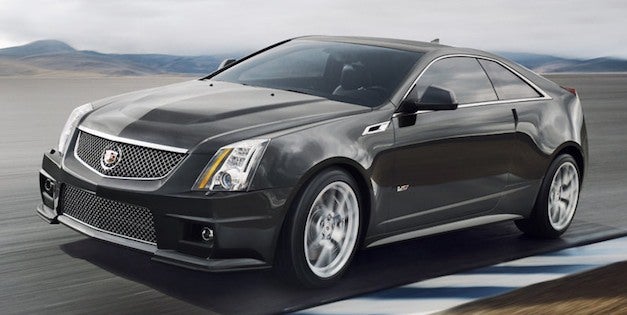
Cadillac beats out BMW as most desired auto brand in the U.S.
Cadillac has beat out BMW to become the most-desired automotive brand in the United States by men, according to results of a market research test by Buyology Inc. “This year’s brand ranking demonstrates that it’s essential for companies to invest in creating deeper differentiated relationships with their consumers. These relationships provide the context that either amplifies or diminishes everything the brand does to connect with its customers,” said Gary Singer, Founding Partner and CEO, Buyology Inc. “Buyology’s neuro-insight tools provide rigorous analytic measurement of these deeper, previously unmeasured, connections to provide unique insight to brands and a roadmap for how to strengthen their relationships.” Check out more news on the Cadillac ATS. Lexus was the only other brand to make it on Buyology’s 2012 Most Desired Brands in the U.S. – it made it to No. 7 on the women’s list. BUYOLOGY INC/uSAMP 2012 MOST DESIRED BRANDS in the U.S. by Men: Southwest Airlines Cadillac BMW Dove Bed Bath & Beyond (we’re not sure why). Apple Google Sharp GE Macy’s - By: Omar Rana