Dimmitt Automotive Group

Blog / Enthusiast Articles

Blog

All Enthusiast Articles Dimmitt Cares News Past Events Audi Land Rover Jaguar Cadillac Events Aston Martin Bentley McLaren Rolls-Royce Video Presentations
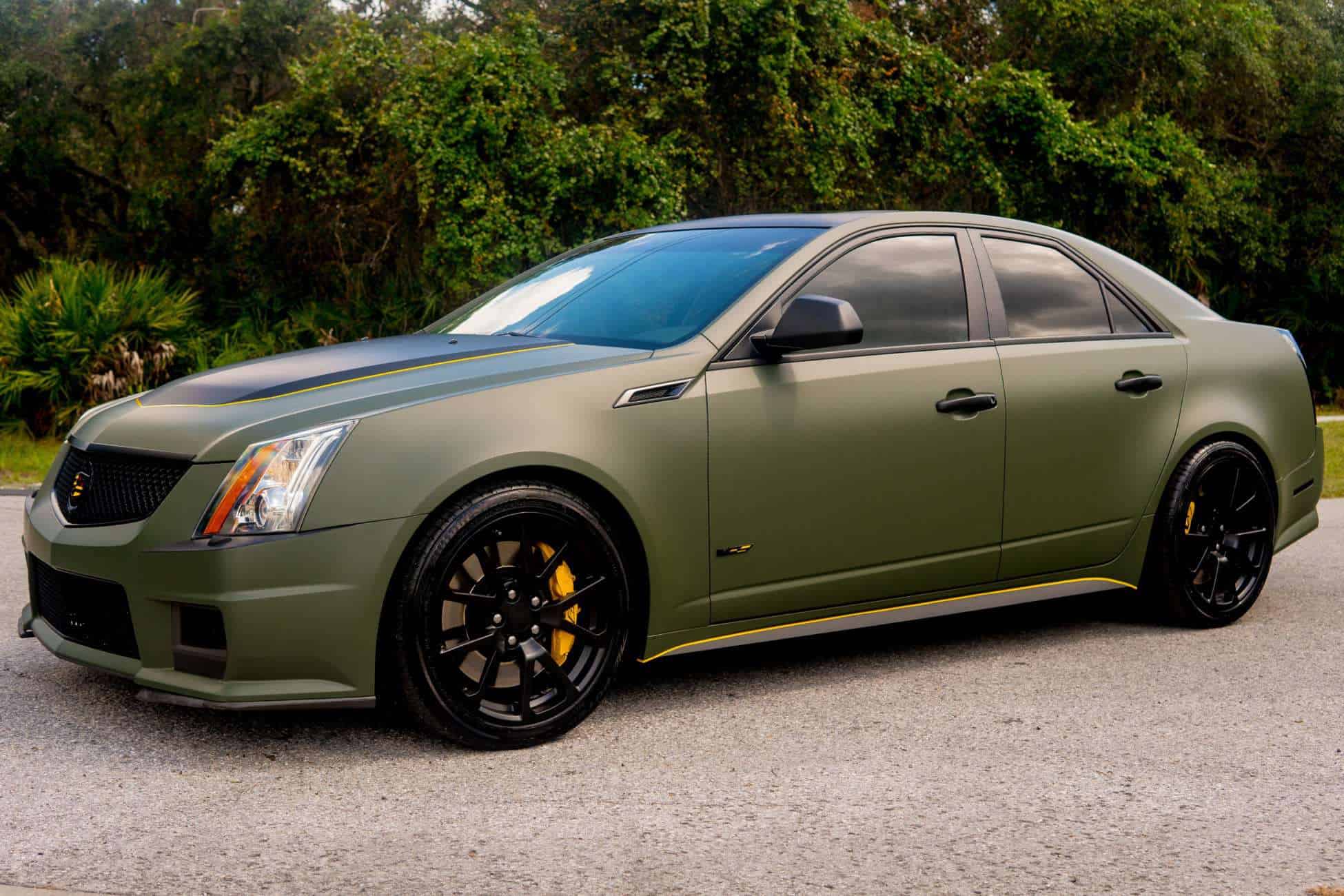
army car low quality.jpg

7 Reasons why you should wrap your car vs. paint!

Why Wrap, and not Paint? Many inquiring customers often wonder to themselves, “Why should I wrap my car instead of painting it?” A paint job can range from $3,000-$10,000+ depending on the quality and paint procedure. Whereas a vehicle wrap can cost $2,500-$5000+ depending on the material and extent of the project. Partial wraps such as roofs, hoods, chrome trim blackouts, and other accents are also a great way to get started in the wrap industry beginning at around $300 shop depending. Along with this much cheaper price tag comes MANY benefits that paint cannot offer. Paint quality can vary especially whilst looking for a cheaper price. Cheaper paints will look great at first, but within a few years can show wear and tear resulting in the paint job needing to be redone. Professionally installed vehicle wraps will leave your vehicle with a breathtaking finish for years to be admired. 7 Reasons to Wrap Your Car Cost: A high-quality paint job can range from $3,000-$10,000+ depending on the color, paint shop, and quality of the paints. Professionally installed films with the highest quality materials can cost $2500-$5,000+ and will have a life expectancy of 4-10 years vinyl depending. For a fraction of the cost of paint, one can choose to wrap their vehicle for as long or little as one desires. Resale Value: Being able to maintain the manufacturer's original paint will keep the resale value intact from a devalued aftermarket paint job. If your company or preference is, for instance, a bright exotic color, it may not be your potential buyers favorite color. Having the option to keep your vehicles original factory color will allow you to keep your resale value intact. Countless Options: Upon purchasing your vehicle you may have wanted something different, or possibly a color that is not available in factory paint. This is where vinyl wraps will allow all of your car fantasies to come true. You will be able to stand out from all of the others and have a truly one of a kind vehicle that suits your personality. If after a few years you are looking for change once again, just have us remove it and choose a new color! Transform your vehicle every few years and keep everyone guessing! Installation Time: When choosing to paint your vehicle you are allowing yourself to be without transportation for up to two weeks or longer. When it comes to wrapping a vehicle, we can have your car fully transformed within 3 -5 days and ready to be picked back up. Don’t leave yourself stranded, wrap it! Protection: Every covered inch of your vehicle in vinyl is protecting your factory paint from all natural hazards and weathering, and not be affected by prolonged sun exposure. Vehicle wrap vinyl is a very durable ~3mill thick material and will act as a shield. Say goodbye to stone chips, abrasion, and other natural hazards! Easy Maintenance: Is constantly waxing your vehicle beginning to take a toll on you? Allow yourself enjoy never having to wax again! Vehicle wraps are extremely easy to maintain and will look brand new once again from only hand washing with soap and water. Also be sure to ask your local installer about specialty quick detail sprays and ceramic coating packages to keep the film even easier to care for! Long Lasting, Safe Removal: High-quality vinyl ensures a long lasting product that can also be safely removed. A wraps life is highly affected by how long it is left outside in the sun causing it to fade quicker. Keeping your vehicle in the garage will allow you to maximize your wraps life to the fullest extent. The vehicle wrap may be removed safely between the 4-10 year period and will NOT affect your current paint. Give us a call at 727-608-5726 or visit our website to get an estimate today! * This blog came from http://www.exoticvehiclewraps.com/why-wrap-your-vehicle/

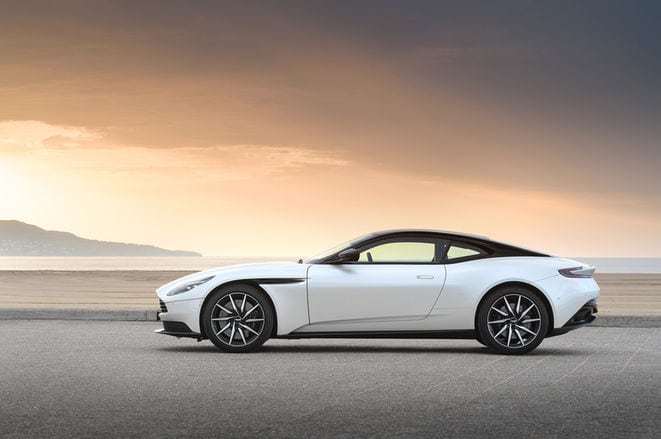
2018-Aston-Martin-DB11-V8-side

The all new 2018 ASTON MARTIN DB11 V8

The 2018 Aston Martin DB11 V8 now at Dimmitt Automotive That's right the 2018 Aston Martin DB11 V8 has arrived. This car is the follow-up act to the flagship DB11 V12 that debuted less than a year ago. The DB11 V8 looks virtually identical to its V12 powered sibling. But under that hood is one of our favorite engines—the thundering 4.0-liter twin-turbo V-8 developed by AMG. This lighter engine means the ability to run smaller brake pistons, delivering far better brake feel -- addressing probably my biggest complaint in the V12 car. Give us a call or stop by our dealership today to get all the details about this new work of art!

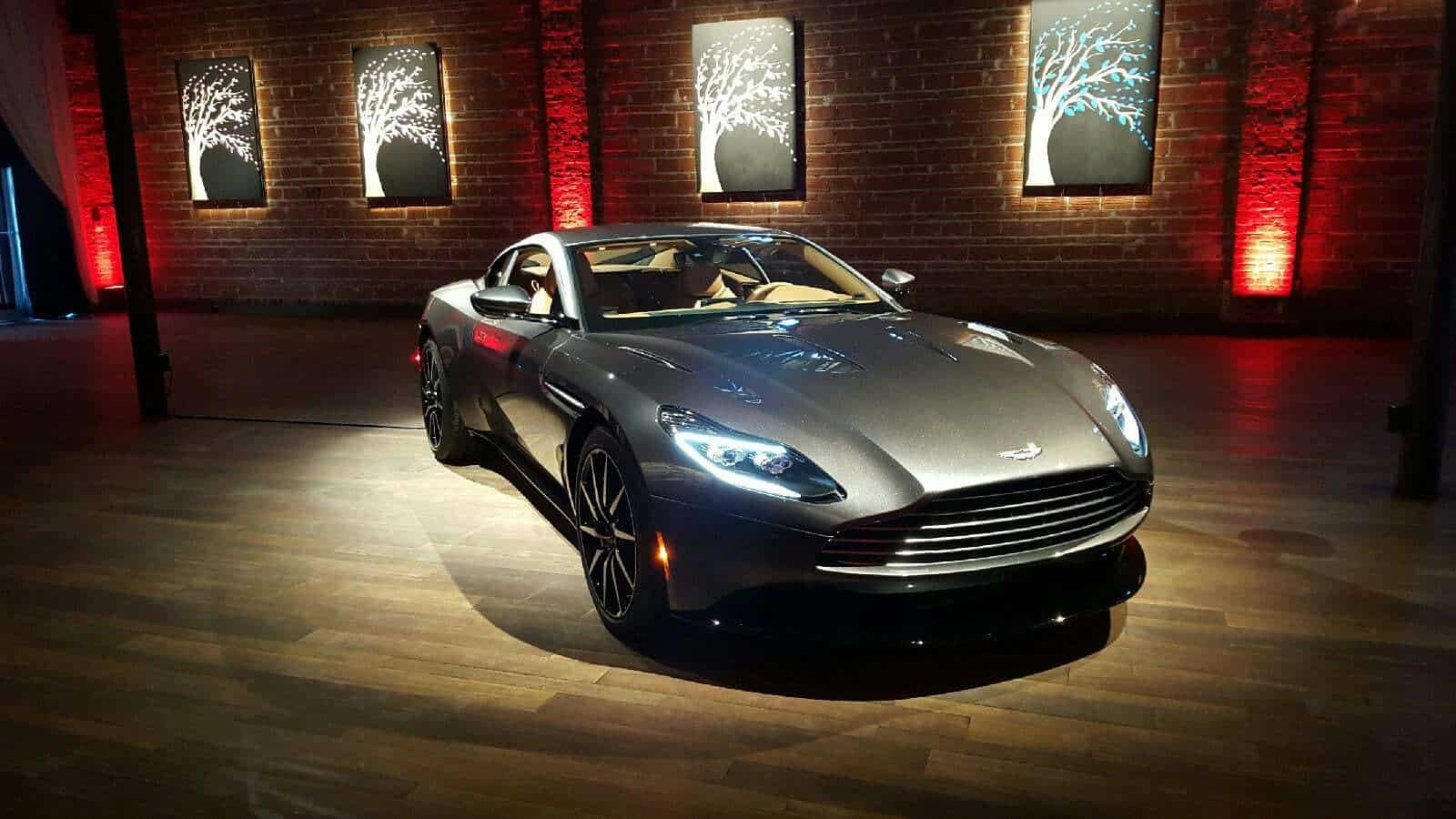
IMG_7894

Aston Martin DB11 - Aston Martin Tampa Bay

The Aston Martin DB11 at Dimmitt Automotive's Aston Martin Tampa Bay Dimmitt Automotive Group, home to Aston Martin Tampa Bay, held a private viewing of the new Aston Martin DB11 this past weekend. Current Aston Martin owners were invited for a special sneak peek of the all new model. The DB11 is a reimagined Aston Martin. The V12 Twin Turbo engine produces 600 horsepower and 516 lb ft of torque. With a top speed of 200mph, and 0-60 in 3.9 seconds, the DB11 is a strong class competitor. The beautiful redesigned interior with push to start technology allows an even greater level of comfort and convenience. Aston Martin Tampa Bay is your local Aston Martin Dealership. Dimmitt Automotive Group - Aston Martin Tampa Bay serves Tampa Bay, Clearwater, St Petersburg, Sarasota, and the surrounding areas. For more information on preordering the DB11, please contact Mark Tillman, manager of Aston Martin Tampa Bay at (727) 493-4602 or visit tampabay.astonmartindealers.com [gallery link="file" ids="289561,289557,289560,289550,289553,289554,289548,289549,289551,289552,289555,289558,289559"]

14

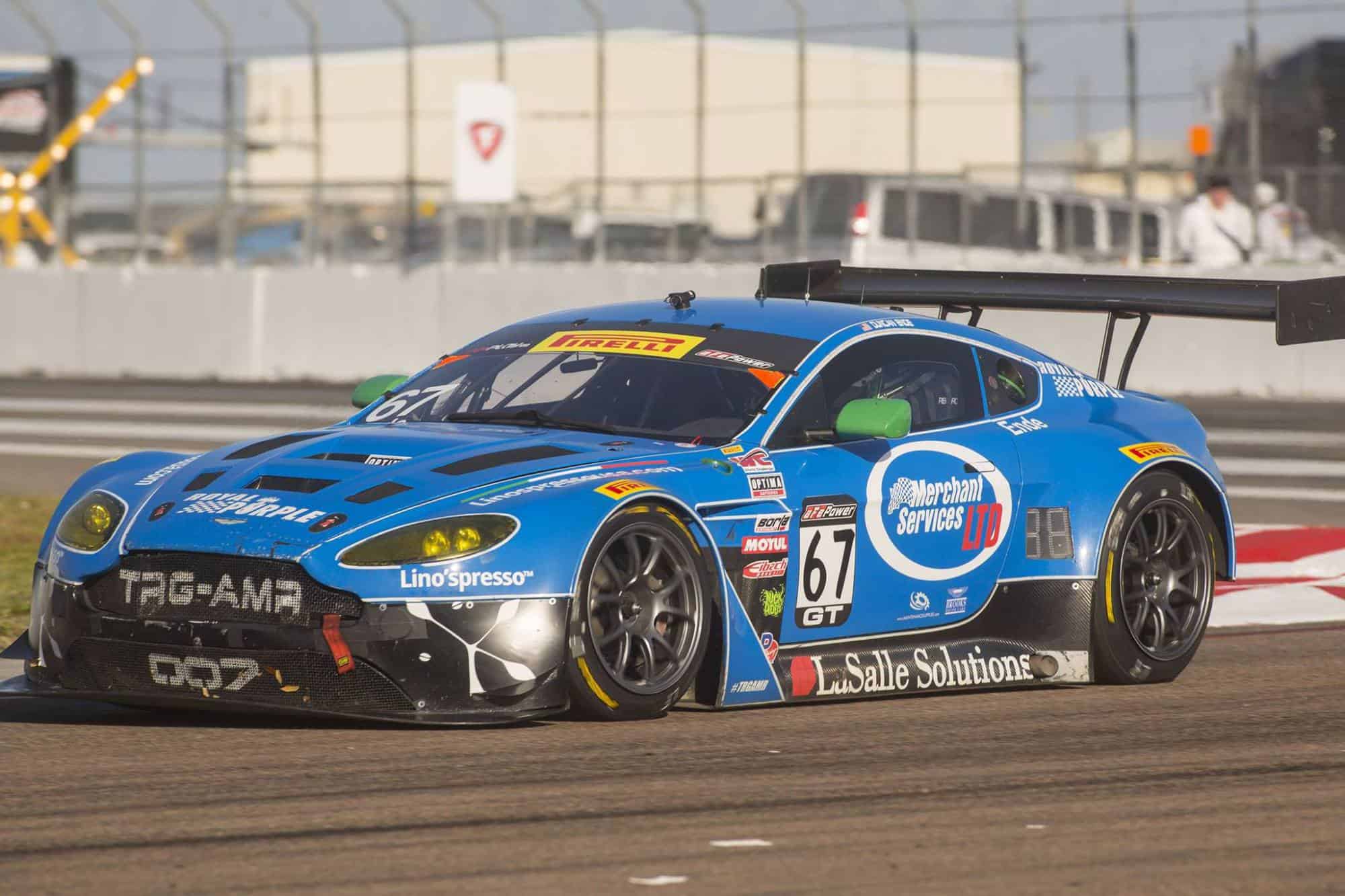
TRG Aston Martin Racing Races in St Pete Grand Prix

TRG Aston Martin Racing at the St Pete Grand Prix, hosted by Dimmitt Automotive Group Last month, TRG Aston Martin Racing Team competed at the St Pete Grand Prix. Dimmitt Automotive Group, home to Aston Martin Tampa Bay, hosted a Thursday night kickoff party in the Aston Martin showroom. TRG Aston Martin Racing showcased a V8 Vantage RaceCar as well as some Adobe Road Wine which is also owned by Kevin Buckler. Sponsors and friends were offered VIP packages that consisted of a private dinner in a penthouse, entry into the Dali Museum to view the race and much more.  Guests enjoyed supporting the Aston Martin Race Team and making new friends. Visit www.Dimmitt.com to view our current selection of new and preowned cars. [gallery link="file" ids="289518,289519,289520,289521,289522,289523,289524,289525,289526,289527,289528,289529,289530,289531,289532,289533,289534,289535,289536,289537,289538,289539,289540,289541,289542,289543,289544"]

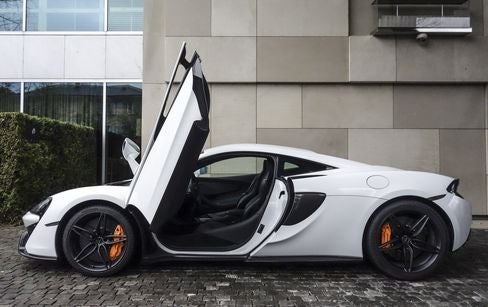
Doors on the 570S open higher and tighter than the ones on the other models.

The McLaren 570S - Power, Precision, Poise, Prestige, Practicality

You can’t have everything in a car, right? Power, precision, poise, prestige, practicality—pick two or three and be happy. But as I drove outside Geneva last week, past soggy Swiss fields and through those tiny French towns with tiny French diners that charmingly and frustratingly close between lunch and dinner, I couldn’t help but marvel at how generally on-target the 2017 McLaren 570S seemed for all of them. Draw a Venn diagram with each of those attributes, and this piece of art falls pretty close to the center. Doors on the 570S open higher and tighter than the ones on the other models. Photographer: Hannah Elliott/Bloomberg The 570S is the latest on-the-market offering in McLaren’s lineup, flanked by a 570GT sister model that is slightly bigger and slower but has a cool glass hatch across the back. Remember back in 2011, when McLaren released the MP4-12C as the first production car from the previously racing-only powerhouse? The 570S is astounding because it shows how far the company has come since then. Like that early car, it is the product of McLaren’s remote,super-high-security research lab in England, but this is the 3.0 edition: polished, refined, smoothed, and evolved into a higher dimension. This is the McLaren you buy when you own maybe two other nice cars, a high-end sport sedan and an elite SUV, say. It’s the one you buy when you want to drive it (read: show off) around town, year-round, on the regular. The dashboard of the 570S is clean, practical, with the few buttons and round knobs all oriented toward the driver—and it's the first McLaren with a vanity mirror. Interior upgrade packages available for $2,990. Photographer: Hannah Elliott/Bloomberg Tight, Lithe Body The 570S is perhaps the most conventionally alluring of any of McLaren’s beautiful lineup. (You’re supposed to buy it in that famous McLaren racing orange, but it looks good in white and gray, too.) Look at it from a side angle, twist out the 19-inch carbon-ceramic wheels, and you’ll see a saucy hip jut out like a petulant teen. Glide past fellow drivers, and its ovoid taillights trimmed in a curved red line leave no doubt about who just smoked whom. The car looks most like other McLarens from the front, with its simple swooped nose, small low front grille, and headlights pulled back close to the windshield like the high cheekbones of a supermodel. One noticeable difference between the 570S and its siblings are its doors, which open higher and tighter than the ones on the other models, allowing it to fit into smaller parking spaces. (Still, similar gull-wing doors in the Lamborghini Aventador and the Tesla Model X SUV swing much lighter on their axis and are easier to close than these.) Most ingenious, though, is a new cut-out configuration along the baseboards on the outside of the car, which lets you step inside from a closer starting point and maintain your composure, avoiding that bent-over, shuffle/fall-down-type of entry typical of these low-slung sports cars. In addition, the insides of the 570S's carbon mono-cell body along where you get inside have been cut at a slant, rather than straight across, further easing ingress. Although you’re supposed to buy the 570S in McLaren's famous orange, it looks good in white and gray, too. Photographer: Hannah Elliott/Bloomberg Those front and rear LED lamps are new, as are the special aeroblades, side skirts, and carbon rear air diffuser. Visibility in the 570S will feel limited—and it is out the back—until you drive something like the Lamborghini Huracan Spyder, and then you feel #blessed. The midmounted engine sits under a black grille at the rear that allows close inspection of its eight cylinders and the gold and silver tubes running throughout. Visible heat waves rising off the coils are almost poetic to watch. Engine Like an Athelete McLaren has given the 570S a 3.8-liter twin-turbo V8 engine; it gets 570 horsepower on a 7-speed automatic transmission. Zero to 60 mph is 3.1 seconds. Top speed is 204 mph. The engine sounds like Christmas. The carbon rear air diffusers are new. As are LED lamps, though the 570S's ovoid taillights (trimmed in a curved red line) leave no doubt about who just smoked whom on the highway. Photographer: Hannah Elliott/Bloomberg Add to that a sub-3,000-pound body weight, and the formation yields laser-quick acceleration and a feeling of supreme road contact. It's easy to forget that's possible if you’ve been driving rote SUVs and sedans for a while. Push the gas pedal along a straightaway, and you’ll feel McLaren’s F1-famous engineering in your bones. I drove the car with winter tires on it (it was late February in Switzerland, after all), but the way the 570S crosses corners reminded me of a NFL receiver at the peak of his career, dominating his way up the field: It has the discipline to direct power into a beautiful arch across space. It handled the winding country roads through the rain—and even a few dirt ones as we cut cross farms—like a champ. Driving the 570S is a joy. Controls on the 570S are streamlined with an easy-to-use (if slightly un-responsive) touchscreen. Photographer: Hannah Elliott/Bloomberg There are three drive modes and, new for this year, a start/stop function that helps economize fuel by killing the engine completely the moment you come to a stop and put your foot on the brake. (You’ll probably want to deactivate it as soon as you start driving, but at least it’s there.) Practical Purposes It might be going a bit far to call the 570S practical in the traditional sense—no, you’re not picking the kids up from school in this—but I can offer four elements that help make the case. 1. The 38-mpg superior fuel economy at highway speeds, which is more than double what other cars of this caliber burn. In other words, no gas-guzzler tax. 2. The decent size of the front-placed trunk, which beats the dimensions of similarly placed trunks I’ve seen recently from Lamborghini and Bugatti. (You could fit groceries in there, but why? Go out to eat—somewhere nice. With a well-placed valet.) 3. A push-button lift system comes standard, raising the car to allow more ground clearance for surmounting angular parking garages. 4. There’s a cup holder. (Drivers of Lambos, Ford GTs, and those great racing Porsches, you know the pain.) A well-appointed base-model 570S costs $184,900. Photographer: Hannah Elliott/Bloomberg Inside the car, the dashboard is clean, with the few buttons and round knobs all oriented toward the driver. The center console computer comes with all the USB, Wi-Fi, and Bluetooth capability you could want and is relatively easy to use, though it could stand to be more sensitive to input. And the resolution on the rear-view camera needs an upgrade. Don’t look for seat massagers, extensive trimming, or a sunroof here. Instead of a back seat, there’s a small ledge for small bags, though using it will likely further impede your ability to see outside. (It’s not so much that you’ll miss seeing cars behind you; it’s that you won’t see anything waist-level or below—pets, kids, stumps, garbage cans—behind you, ever.) Building a Consumer Brand It is significant that this is the first McLaren to come with a vanity mirror. The brand is using the 570S to appeal to slightly younger drivers and will make slightly fewer than 800 of them this year—roughly twice than what it’ll sell of the 650S and the new, more-rarified 675LT combined. A quick break after cruising country roads around Geneva. Photographer: Adam Wolffbrandt/Bloomberg It’s also interesting to note that the 570S offers more factory options than we’ve seen before, too. A Luxury Pack that includes 12-speaker Bowers & Wilkins sound, electric and heated seats, soft-close and electric steering costs $6,530; trim packages that upgrade all interior materials cost $2,990; louder sport exhaust costs $3,860. (Consider that McLaren’s nod to those who want to be sure they didn’t sacrifice street cred by buying the company’s more road-friendly model.) As with Ferrari’s California and Lamborghini’s Huracan, so McLaren’s 570S is the natural step in the evolution of a high-end car company with serious racing heritage as it delves deeper into the world of production models. It means that McLaren is expanding its reach past just the die-hard loyalists (nearly totally white, middle-aged male track fiends) toward people who are more diverse in their lifestyle, demographics, and proclivities. To reach those people, you have to make cars that offer something more polished and applicable to daily life. The 570S does this. A well-appointed base-model 570S costs $184,900, which saves you $80,000 over the McLaren 650S and about $10,000 from, say, a Ferrari California. It puts it right in range with the $188,100 Porsche 911 Turbo S or a highly tricked-out Audi R8 or Acura NSX Type R. To my mind, that’s a good price pocket—expensive but still far cheaper than many exotics. And more than a fair bargain for having it all. Via: Hannah Elliot, http://www.bloomberg.com/news/articles/2016-03-07/2017-mclaren-570s-review-drive-video

2016-cadillac-ct6-first-drive-review-car-and-driver-photo-665507-s-original

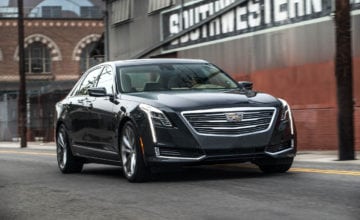
Why The CT6 Is Cadillac's Square-Peg Sedan

LOS ANGELES -- As Cadillac prepares to launch the new CT6 large sedan, it's trying something different in its long-running bid to challenge the German luxury brands. It's being different. With almost every new entry in recent years, Cadillac has tried to match BMW, Mercedes and Audi. The Cadillac ATS and CTS sedans were developed almost inch for inch to the dimensions of their German peers, drop for drop to the engine displacement -- and yes, nearly dollar for dollar on sticker price. Same with Cadillac's go-fast V series variants, which took dead aim at the horsepower ratings and the 0-to-60 times of the German models. But the CT6 that hits showrooms in March is its own animal. It's a fresh approach to the big-boy luxury sedan category, one that defies categorization in terms of its size, interior space and price. As Cadillac President Johan de Nysschen told auto journalists during a media test drive here last week: "It is a car like no other." Big talk, for sure. But he's got some numbers to back him up. Even though its dimensions straddle the midsize and large-sedan categories, the CT6 looks every bit the part of a large luxury car. It's got serious road presence, with a long hood and low, wide stance. Its cavernous interior rivals BMW's 7 series and Mercedes' S class in space. But General Motors' alternative approach to the CT6's chassis development has rendered it lighter than even the smaller CTS. GM is using a mix of aluminums and high-strength steels, largely welded together with minimal riveting and fewer overall components. That has enabled Cadillac to equip the CT6 with a powertrain lineup befitting that of midsize sedans and offer the promise of sprightly, agile performance in a big-sedan package. (Journalists who test drove it here were restricted from publishing reviews until later this week). How the Cadillac CT6 stacks up against big-sedan rivals 2016 CT6* 2016 BMW 740I 2016 Mercedes s550 Wheelbase 122.4 in. 126.4 in. 124.6 in. Length 204 in. 206.6 in. 206.5 in. Curb weight 3,926 lbs. 4,225 lbs. 4,773 lbs. Front legroom 42.4 in. 41.4 in. 41.4 in. Rear legroom 40.4 in. 44.4 in. 43 in. Engine 3.6-liter V-6 3.0-liter I-6 4.7-liter V-8 Horsepower 335 320 449 Price** $64,565 $82,295 $95,650 *Premium luxury trim **Includes shipping A few other numbers that underscore how the CT6 is tough to pigeonhole: • The CT6's wheelbase is nearly 6 inches longer than that of the BMW 5 series, but the Cadillac is lighter. • A CT6 with a twin turbo, 3.0-liter V-6 is priced at $65,390, vs. $82,295 for the 7 series with the same displacement and power. • The CT6 is just 2 inches shorter than the S class, though its twin-turbo V-6 model is 700 pounds lighter than the Mercedes S550 with its 4.7-liter V-8. Of course, the fact that the CT6 starts with a 2.0-liter, four-cylinder turbo engine and no V-8 underscores the fact that it is not a range-topper out to unseat the Germans' flagship sedans. Mercedes doesn't even bother with an S class engine smaller than a V-8. (That engine differential also explains some of the weight difference). De Nysschen has said there is a flagship in the works for around 2020. In the meantime, the CT6's tweener status could make it tricky for Cadillac to pitch the car to import drivers, says IHS Automotive analyst Stephanie Brinley. IHS forecasts annual U.S. sales of 12,000 to 15,000 units in coming years. "The bigger problem continues to be getting on the shopping lists of traditional luxury buyers," she said. Cadillac executives here steered clear of bold proclamations about pulling drivers out of their S class or 7 series sedans. De Nysschen was reluctant to cite any one brand for conquests, instead saying that the CT6's unique package and "aggressive pricing strategy" should be enough to get it on the radars of luxury buyers. "We priced the car very competitively," he said, "and we'll let it find its natural level in the marketplace." Cadillac CT6 The 2016 CT6 is a “tweener” -- closer to a big luxury sedan in size and closer to a midsize lux sedan in price. Cadillac wants to carve its niche as a driver's car, one that can satisfy the affluent customer's desire for a spacious and nattily appointed cabin without giving up tight and nimble driving dynamics. It will serve as Cadillac's flagship sedan for several years -- at least -- as the brand's comeback bid unfolds. It returns Cadillac to the brand's “spiritual home” of big luxury sedans, brand chief Johan de Nysschen said. But “it is absolutely forward-looking and forward-thinking.” Powertrains: A 2.0-liter, turbocharged four-cylinder and a new 3.6-liter V-6 both serve as base engines; a Cadillac-exclusive 3.0-liter, twin-turbo V-6 tops the lineup. Each will be mated to a GM-developed, eight-speed automatic transmission. Technology: Active rear-wheel-steering feature to improve cornering and traction Safety: Enhanced night vision identifies people and animals via heat-signature images in the driver-information screen. Sales target: 10,000 to 15,000 vehicles a year in U.S., per forecasting firms Competitors: BMW 5 series or 7 series; Mercedes E class or S class; Audi A6 or A8 Strengths: Exceptional driving dynamics for a big sedan Weaknesses: No V-8 engine option Bottom line: Cadillac showed confidence in the CT6's ride-and-handling chops by allowing some 100 journalists to flog the car on twisty mountain roads outside San Diego. Across the engine lineup, it returned driving characteristics of a smaller performance sedan. Now, Cadillac marketers have the tough task of convincing import-leaning buyers to take one for a test drive. VIA: http://www.autonews.com/article/20160124/RETAIL/301259983/why-the-ct6-is-cadillacs-square-peg-sedan?profile=1657&cciid=email-autonews-carsconcepts

McLaren 570S - Drive, Startup, Walk-Around, Fly-By's

The new McLaren 570S is the newest edition to the McLaren Sport Series. The McLaren Sport Series combines high performance with luxury and everyday usability. The 570S features a twin turbo V8, generating 562 horsepower and 443 ib ft of torque. Several interior options are available including alcantara and leather. For more information on the 570S, contact Matthew Jones at Dimmitt Automotive Group, home to McLaren Tampa Bay. Call 844.494.1134 or visit www.Dimmitt.com. [gallery link="file" ids="289300,289302,289304,289305,289307,289306,289299,289303"]

2017-bentley-bentayga-first-drive-review-car-and-driver-photo-662694-s-original

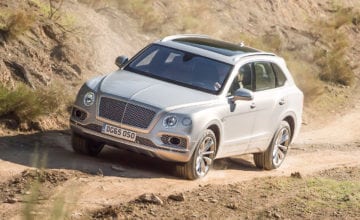
2017 Bentley Bentayga Review

Legend has it that Ettore Bugatti once called the Bentley 4½ Litre the “world’s fastest truck.” We’re guessing that he didn’t know he was merely being prophetic. Because now Bentley builds an SUV, and guess what? Its 187-mph top speed is the highest on record for a vehicle of that type. Why an SUV? Simple: People who drive Bentleys tend to have other vehicles (a lot of them), and the vehicle they drive in the winter—or when it’s raining, or foggy, or below 75 degrees—tends to be an SUV. Now that Bentley makes an SUV, a lot of those buyers will make that SUV a Bentley, as well. For the last three years, Bentley has sold more than 10,000 vehicles annually, a major milestone for the company. The Bentayga is going to help obliterate that record: The company plans to build 5500 Bentaygas in 2016. That estimate already has been revised upward once, and company executives tell us that, as interest builds, that figure may enjoy yet another upward correction. And while the Bentayga might be tall for a Bentley at 68.6 inches, it’s not otherwise particularly large for one. At 202.4 inches long and 78.7 inches wide, it’s about 17 inches shorter than a Mulsanne and three inches wider. At nearly 5400 pounds, it’s about 550 pounds lighter than the Mulsanne and just shy of a Flying Spur W-12. The floorpan is steel, but most of the rest of the sheetmetal is aluminum, including all exterior panels. Bentley says that the body side is the auto industry’s largest single aluminum stamping. With its (relatively) low mass for a Bentley, the Bentayga is kind of spectacular to drive. The damping of the multilink front and rear suspensions is exemplary. Even over the extreme speed bumps peppered throughout the hamlets of southern Spain, the most massive of wheel displacements are forgotten in a single, gentle compression and rebound of the suspension. The electric power steering is weighty and direct, although it doesn’t enjoy a ton of feel. But by SUV standards, it’s excellent. As are the brakes. The pedal is firm and progressive, and even barreling down the twisting switchbacks of the Sierra Blanca mountains, there was never a hint of fade. Handling is neutral enough that you’ll forget this is a 5400-pound SUV with a 12-cylinder engine in the nose. Sure, you can force it into understeer, but you can also set it up to flow through turns better than a vehicle this size has any right to, mostly because it corners remarkably flat. Its outstanding body control is the result of Bentley Dynamic Ride, a new active anti-roll bar that counteracts natural roll with a pair of electric actuators, one at each end of the vehicle to stiffen and soften the front and rear bars. It’s a trick system, but don’t expect the sports-car world to rush to adopt it. In order for the system to act quickly enough, says product-line director Peter Guest, it needs to operate on 48 volts, with a supercapacitor meting the voltage. With the bars, the actuators, the supercapacitor, and the heavy-duty cables—which he says are about four times the diameter of most automotive cables—the system weighs between 30 and 40 pounds. Bentley chief executive Wolfgang Dürheimer says Bentley Dynamic Ride is technically capable of leaning the Bentayga into a turn, motorcycle-style, but, in the interest of passenger comfort, the company stopped short of allowing that capability. We’d be quite interested to see what sort of impact that would have on cornering. The system allows a firm, controlled—but never harsh—ride on pavement but allows maximum wheel articulation off. Ready to Crawl That’s right: off road. Because this is a Bentley meant for dirt, our drive included some semi-serious off-roading. At first we feared that the trail was going to be too easy, something a rental Toyota Camry could conquer, but we got into some pretty tricky attitudes—the oiling system is designed to keep the engine lubricated at up to 35 degrees of tilt in any direction. We crawled through a few ditches that had the Bentayga alternately kissing the ground—a few trucks in our group actually did scuff their chins, an occurrence that is probably about 10 times more expensive than your entire beater Jeep—and hanging a rear wheel off the ground at full suspension droop. There are, of course, additional vehicle settings for off-roading: snow and grass, dirt and gravel, mud and trail, and sand dunes. There are two suspension settings that raise ground clearance a little or a little more (Bentley declined to provide specific figures). Hill-descent control holds your speed on downslopes, and there’s an infotainment-system screen that monitors each of these settings as well as wheel articulation and incline/decline and side-slope angles. Also, the front parking camera is well suited to peeking over sharp crests for a better view of what’s out of sight below the Bentayga’s domed hood. Some of these features distract from the simple joy of driving through nature—as does the pulsing of the brakes mimicking limited-slip differentials—but you don’t have to use them. They turn off automatically above 47 mph in case you accidentally drive onto pavement with them still engaged. At the end of the trail, Bentley had positioned a car-washing crew, but we waved them off and finished our drive proudly wearing a fine dusting of ruddy dirt over our Bentayga’s immaculate Verdant Green paint. The off-road driving might be impressive, but the de rigueur semiautonomous operation is less so. As is the standard for modern luxury vehicles, the Bentayga pairs its adaptive cruise control with an automatic lane-keeping function for short stints of hands-off driving. But like many of them, Bentley’s system tends to either ping-pong back and forth in the lane or crowd the middle of the road with the wheels nearly on the center line. If you signal to pass the car in front, it won’t pull out like the Tesla Model S does, but it will accelerate toward the car ahead, which seems like the wrong order of operations. We found the system more annoying than helpful, fighting us with little steering-wheel tugs on even our most relaxed lines through corners. Where once there were rumble strips and other motorists honking, now there’s electric power steering jerking the car back and forth. It’s not necessarily more graceful than the old system, but at least it’s less obnoxious to other motorists. ‘W’ For ‘Win’ But don’t worry, the Bentayga is fully capable of being obnoxious. The all-new 6.0-liter W-12 grunts out 600 horsepower at 6000 rpm and 664 lb-ft of torque from 1350 to 4500 and will whip this horse to 60 mph in a claimed four seconds flat. That’s sure to widen the eyes of occupants and bystanders alike. The new W-12 shares its bore spacing with its predecessor but no parts. Bentley shaved 66 pounds from this generation, an impressive feat with such a dense box of mechanical parts. Engineers pulled precious ounces from everything—the block, heads, crank, and cams to name just a few. The one system that isn’t lighter is the fuel injection, which now has direct and port injectors. At idle and under full load, the direct injectors do their precise work, while the port injectors are engaged at part throttle, when they’re said to better mix fuel and air while reducing emissions. Bentley also claims the W-12 is 10 percent more efficient than its predecessor, with cylinder deactivation shutting down six cylinders when conditions are right and a “sail mode” that decouples the engine from the transmission when the driver is off the throttle at higher speeds. We noticed neither system at work. Product-line director Guest says that twin-scroll turbos are much of the reason the W-12 is all-new—the engineers couldn’t fit the faster-spooling turbos onto the old engine. Here, they’re so snug against the block that they’re almost integrated into it. And they actually are integrated into the exhaust manifolds. New oil pumps make sure the turbos get a steady supply of fresh oil even at extreme off-road angles. Immaculate Interior Guest also tells us that the sound insulation that enables Bentley’s famously serene interiors means that those worried about off-road dust in their Bentleys have nothing to fear. Like any Bentley, the Bentayga uses triple seals around all openings, and sound waves are smaller than any particulates. “Once you’ve insulated for noise, you’ve insulated for everything,” he says. The Bentayga’s interior is one you want to keep pristine. Buyers can choose from 15 colors of hide to trim the cabin, in three different two-tone layouts, plus contrast or matched stitching and piping. There are seven different veneers—heck, there are 14 different seatbelt colors. Not only does the instrument panel still use physical gauges with real needles, but those gauges are protected behind a sheet of actual mineral glass, rather than the plastic used on just about every other vehicle. The speaker grilles are even designed to mimic high-end stitching. And of course that’s only the beginning. Buyers can spend $5715 on extracost paints, $7870 for the Touring Specification technology package, $11,015 to replace the three-place rear bench with two individual thrones, $7155 for a pair of removable tablets to put in front of those seats, and $28,500 on carbon-fiber trim. Plus, a ton of other stuff, including pie-in-the-sky customization. It’s pretty easy to send the base price of a Bentayga from $232,000 to well north of 300 grand. But the coolest (and most appalling) thing in the Bentayga interior is the optional Breitling clock set atop the dashboard. It’s available in either white or rose gold, with a face of black or white mother-of-pearl, and studded with eight diamonds. Cost? 150,000 euros, or about $160,000. Only a handful of craftspeople make the clocks, which take three months apiece.That exclusivity guarantees that Bentley will sell the four it can offer every year. Even without that clock, the Bentayga should vacuum massive amounts of cash into Bentley’s coffers. As the Volkswagen Group, in the wake of its diesel scandal, scrutinizes the business case for every last model in its portfolio, maybe Bugatti will want to take its own crack at that “world’s fastest truck” business. VIA: http://www.caranddriver.com/reviews/2017-bentley-bentayga-first-drive-review

-1x-1

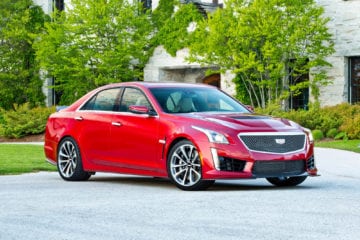
The 2016 Cadillac CTS-V Is the Best Sedan America Can Offer

When was the last time you heard an engine and knew it was a Cadillac coming down the road? Not lately, I’d imagine. The Escalade and ATS aren’t exactly the roaring type. The 2016 Cadillac CTS-V sedan, on the other hand, is. Coming up the driveway or around a bend, that supercharged 6.2-liter V8 sounds like a grizzly bear. It shouldn’t be too surprising. The third-generation CTS-V shares the same angry engine as the Corvette Z06. It gets 640 horsepower on its 8-speed, automatic, rear-wheel driver, with a 60-mile-per-hour sprint time of 3.6 seconds and an honest-to-goodness top seed of 200mph. Pushing up the highway last week outside New York, the CTS-V ravaged the road wherever I pointed it. Push the gas and it’ll bound forward, all four corners at once, and devour asphalt as if it’s storing protein for a long winter ahead. It feels big and square to drive; this is no sport coupe. The rear-wheel drive feels powerful, if a little heavy, in a way that could soon define a nouveau Detroit opulence. This would be a good thing. In fact, those stats put the CTS-V on par with the best sedans from Europe—the $94,100 BMW M5, the $101, 700 Mercedes-Benz E63 AMG, the $141,300 Porsche Panamera Turbo. While it neither performs as excellently as the Panamera nor looks as elegant as the Benz, it belongs right in the thick of the group as the best sedan America can offer. What You Can Get The CTS-V is the high-performance version of the CTS sedan, Cadillac’s foray into the luxury sedan market that has been dominated by the Audi, BMW, Mercedes, Porsche, and, to a lesser extent, Lexus and Jaguar. There were two additional body styles besides the sedan—a coupe and a wagon, currently unavailable—and the three constitute Cadillac’s current best hope at full brand revitalization after years of stagnation. (Its formerly-of-Audi bossand upcoming XT5 will have a lot to do with it, too.) Plenty has been said about the CTS-V’s abilities on the track. (Yes it has launch control; no, it doesn’t have an option for manual transmission.) The steering could be a little more responsive, but the performance traction management, magnetic ride control, limited-slip differential, and massive Brembo brakes manage the car with ease. You’re not going to do any acrobatics with this car (symbolically speaking, that is), but it is straightforward and eager, with body roll almost nil. There is no guile under this hood. The real question is whether you’re going to want to drive it around town. Are you under the age of 40? If you are, Cadillac is hoping—betting—the answer is yes. The Looks and the Price The sticker price will be the first obstacle you’ll face: MSRP on the 2016 model is $84,000, but that number will quickly jump to $90,000-plus once you add certain essentials ($2,300 performance seats, $900 19-inch wheels, $595 red brake calipers). Are you okay with that? It still costs less than its German competitors, but it’s by far the most expensive car Caddy sells. Its entry price beats even the Escalade and is surpassed only by the Platinum edition of that SUV. Next up is the face. How do you feel about angles? The CTS-V has high-intensity headlamps shaped like long triangles at front; the rear is characterized by a small sport spoiler tilted up at a 45-degree angle and a bottom fender pointing slightly out in the center, like an arrow or the roof of a house. The Cadillac badge just above it has been blown up, sans wreath, more than in previous years—quite the enormous bit of Americana. Look at the car straight-on, and you’ll see a narrow lattice front grille and long, horizontal air slats that sit between lines bulging up in the carbon fiber hood to accommodate the engine underneath. They form the shape of an H before shooting back past the dorsal fin toward the rear of the car. Steel quad tailpipes at the very back hint at the beautiful sound potential within. (While the angular side mirrors complement the effect, they don’t afford enough visibility.) The look is edgy like a razor, rather than curved, as with the more feline Panamera. CTS-V looks pleasingly modern and unique. You won’t mistake this for anything but a Cadillac. I like it. Inside the Machine Inside the car is a different matter. The 8-inch touchscreen and interchangeable instrument cluster certainly look cool, but there’s nothing like repeatedly pushing the inept “touch” screen buttons on the center console—which demand increasingly more frantic bumps in order to take any action—to make you feel insane. Trying to adjust something so simple as the volume proves distracting at best and dangerous at worst. The standard-issue heads-up display, heated mirrors, and auto-dimming mirrors provide some small solace, as do the curbside and rear-view cameras that help with parking. You’ll find that Bluetooth, Bose surround sound, wireless charging, dual-zone climate settings, passive entry, and remote vehicle start are all standard, as they should be for a car in this price range. Cadillac also includes 20-way heated and ventilated seats in the front, though it would be better if they were totally leather, not just “trimmed.” I am not a fan of “suede” microfiber inserts along the seats and headliner; they feel soft, as if they should be in something a little more sedate, not something with such a serious, aggressive exterior. Other interior dichotomies include the sport alloy pedals that look race-worthy and come standard and the suede microfiber-covered steering wheel and shifter that cost $300 extra and seem out of place. Still with me? Good. Here’s a further obstacle for you, one that has more to do with convenience than with cash. The car gets 14 miles per gallon in the city. Aside from the cost to your wallet (including the $1,000 federal gas-guzzler toll) and to the environment, that means you’ll be taking frequent stops to replenish fuel. I hate having to stop for gas—just get me in the car, and let’s go—and I suspect you feel the same. This is 2016, very nearly. There is no excuse for producing such a thirsty turkey. How to Use It I will note that while that a 14mpg rating lags behind the E63 AMG and even the $79,400 Corvette, it does no worse than the M5 and Panamera Turbo, and it beats the $89,000 Dodge Viper by 2mpg. It certainly beats anything even nearly comparable from the U.S. in terms of performance and practicality. This is a real American sport sedan that will work admirably as a daily driver while more than keeping up with the Euro whips on the track. And so far, so good: Steve Martin, head of product communications at Cadillac, told me recently that sales of the CTS-V this year have “far exceeded” initial expectations and that “every single” one the company is building right now has someone’s name on it. “It doesn’t look like that will change any time soon,” he said. Indeed. If you can stomach the interior inconveniences and you want to get in early on something verging on American greatness, this is the one for you. This is a real American sport sedan that will work admirably as a daily driver and more than keep up with the Euro whips on the track. Source: Cadillac (Corrects the seventh paragraph to accurately reflect the size of the CTS-V line. Cadillac is not currently making a CTS-V coupe or station wagon.) VIA: http://www.bloomberg.com/news/articles/2015-12-21/the-2016-cadillac-cts-v-is-the-best-sedan-america-can-offer

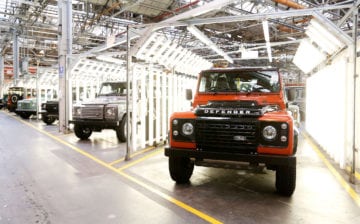
Land Rover Defender automobiles sit in a final inspection area at Tata Motors Ltd.'s Jaguar Land Rover vehicle manufacturing plant in Solihull, U.K., on Wednesday, July, 15, 2015. Jaguar Land Rover, the U.K. luxury-car unit of Tata Motors Ltd., cut its sales targets and prices in China amid slowing demand in the world's largest auto market. Photographer: Chris Ratcliffe/Bloomberg

Land Rover Defender Ends 70-Year

The Land Rover Defender Ends it's 70-Year Run of Ferrying Farmers and Royals. The Land Rover Defender is boxy, beastly and beloved. Early next year, it’ll be history. Land Rover Defender automobiles sit in a final inspection area at Tata Motors Ltd.'s Jaguar Land Rover vehicle manufacturing plant in Solihull, U.K., on Wednesday, July, 15, 2015. Jaguar Land Rover, the U.K. luxury-car unit of Tata Motors Ltd., cut its sales targets and prices in China amid slowing demand in the world's largest auto market. Photographer: Chris Ratcliffe/Bloomberg For seven decades, the Defender off-road vehicle has barely changed from a design so simple it was originally sketched in beach sand. Slabs of aluminum. A windshield with virtually no tilt. A roof rack made to hold steamer trunks or lion carcasses. A spare tire hanging off the back door. That uncompromising approach has delighted customers from English sheep farmers to Winston Churchill and Queen Elizabeth II. The Defender has shuttled soldiers in the Korean War, Red Cross volunteers in crisis zones around the world and Lara Croft in the movie Tomb Raider. In January, its run will end, and the company hasn’t said when there will be a replacement. The 23,100-pound ($35,100) car synonymous with British country living has become as anachronistic as a fox hunt. Its raw metal surfaces are at odds with pedestrian safety standards. Its carbon-dioxide emissions are twice the European fleet standard, and it has no touchscreens, mobile connectivity or cordless phone charging. Airbags? Nice try. “It’s time to move to a new chapter,” said Nick Rogers, Jaguar Land Rover’s head of engineering, who learned to drive in a Defender. “We want to move forward with a new car.” Jeep’s Bluetooth Land Rover is losing its flagship because the brand relied too long on rural estate owners, ignoring the rise of soccer moms and urban adventurers. Its modest price tag meant modernizing the Defender made little sense, leaving it with just its authenticity as a selling point. By contrast, the Jeep Wrangler, a descendant of the World War II military vehicle, has been kept current with electronic stability control and Bluetooth connectivity. A successful relaunch of the Defender could follow the track plowed by Mini. Since being reborn under BMW AG, the offbeat British city car has grown into a global brand that includes an SUV variant and sells from Birmingham to Beijing. But the Defender’s association with bone-jarring off-roading may make it more of a struggle to re-establish, and Land Rover already thoroughly covers the upscale SUV segment from the compact Evoque to the top-of-the-line Range Rover. The Defender’s demise comes as global demand for sport utility vehicles is set to soar 37 percent to nearly 26 million cars in 2018, according to researcher IHS Automotive. Jaguar Land Rover needs a bigger piece of that pie after reporting a 92 million-pound loss for the second quarter. Its answer has been Jaguar’s first-ever crossover and the entry-level Land Rover Discovery Sport, its cheapest model at $37,455. Before the Defender rumbles off into the sunset, Land Rover will sell about 20,000 this year, IHS estimates, down from a peak of about 56,000 in the 1970s. Its total 68-year production run will be more than 2 million cars. The prospects for Land Rover to squeeze in a new Defender will be tough as competition in the segment intensifies. Fiat Chrysler Automobile NV’s Jeep is broadening its range with cheaper models such as the $17,995 Renegade. On the high end, Land Rover must contend with Maserati and Bentley entering the space as well as the burgeoning SUV lineups of Mercedes-Benz and BMW. Mercedes has its own heritage off-road vehicle, the G-Class -- though in contrast to the Defender, the Mercedes has enough fine leather and chrome to make it fit on the streets of Beverly Hills. Land Rover and its parent company, Mumbai-based Tata Motors Ltd., face the challenge of developing a new Defender without losing the values of the original. While they’ve promised to overhaul and reintroduce the icon, they haven’t said when it might resurface or whether production will continue at the factory in Solihull, England, where most of the assembly is still done by hand and there’s a wall covered with personal memorabilia from buyers. Key to the Defender’s rebirth will be winning over city-dwellers with what its designer, Maurice Wilks, called a “go-anywhere, do-anything” vehicle. If it can maintain its quirky authenticity while adding new comforts and technology, Land Rover can hold on to old fans and win over new ones, said Franz-Rudolf Esch, director of the Institute for Brand and Communications Research at EBS Business School near Wiesbaden, Germany. “What doesn’t move with the times dies,” Esch said in an e-mail. “The Defender must remain true to itself even as it reflects the Zeitgeist and the changing expectations of customers.” Waist-Deep Water On a recent drive along Land Rover’s back-country track near Birmingham, England, it’s easy to see how the Defender gained cult status. It powered through nearly waist-deep water, trundled handily up the muddy inclines and survived a steep drop off a collapsed bridge. The feel is very much last-century, with a comically large turning radius and a hand brake that sits uncomfortably low. The windows steam up almost immediately. But there’s no denying the charisma, as Munich sales manager Stephane Anger will tell you. “I wanted something different,” said Anger, a father of three who gave up a BMW 5-Series sedan in favor of a black Defender, which he drives to his family’s hut in the Austrian Alps. “The Defender has no trouble with any slope.” Via: http://www.bloomberg.com/news/articles/2015-11-20/land-rover-defender-ends-70-year-run-ferrying-farmers-and-royals

FullSizeRender

Bentley Bentayga Unveiled in The Sarasota Studio

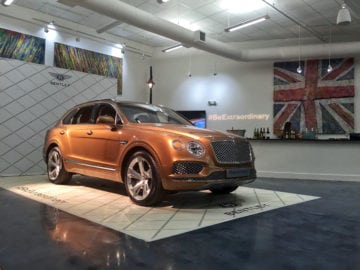
On Saturday, November 7th, Dimmitt Automotive Group, home to Bentley Tampa Bay, launched the new Bentley Bentayga in Sarasota, Florida. Dimmitt Automotive Group's newest addition, The Sarasota Studio, made for an incredible showcase of the new Bentley SUV. The Sarasota Studio will offer luxury preowned vehicles with the same legendary service that Dimmitt Automotive Group is widely known for. Bentley owners were invited to preview the Bentayga and invited to place an order. The Bentley Bentayga: A New Chapter For Bentley Motors When first tasked with designing Bentayga, the team at Bentley were faced with more than just creating a new car. Their challenge was to elevate the very concept of the SUV to powerful, luxurious new heights. To create a car that would cause the world to see the SUV sector through entirely new eyes. The journey of Bentayga’s design, crafting and refinement has been a long one, but it is a process now completed. To see how the story unfolded, read on. See Light To create such a revolutionary car, Bentley’s designers were compelled to think in new ways. When you look at a car, you don’t really see it. It’s the same when you look at any solid object. Colours and contours are merely illusions; all our eyes really see is light, bouncing off surfaces in different ways. It is the way our brains process light that gives us our 3D view of the world. Bentayga’s exterior was designed with this principle in mind and made real with Bentley’s world-famous sculptural prowess. Strategic design elements like the ultra-sharp power line, signature ‘horseshoe’ at the rear and the muscular haunch, adding volume and power to the taller profile, are complemented by individual and dynamic detailing: the B-shaped wing vent behind the front wheel arch and Bentayga’s signature ‘B’ graphic rear lamps. From the four round headlamps that flank the matrix grille to Bentley’s trademark ‘double wing’ cockpit design, Bentayga brings the marque’s DNA to the SUV. See Texture Nowhere in the world are cars crafted with the same passion and skill as they are in the Bentley factory. Because, when it comes to the way we experience a car, the way it feels matters just as much as the way it looks. Texture is everything. With the arrival of Bentayga, the world will see craftsmanship of this calibre applied to an SUV for the first time. For those lucky enough to experience it, new heights of luxury will be reached. For the rest of the world, the SUV category will never look the same again. From the outset, Bentayga was going to be revolutionary. And a revolutionary car warrants a revolutionary approach, in every aspect of its development. When it came to designing the camouflage that would disguise the car during its open-air tests, inspiration was sought in the art world: in particular, the work of 1960s Op Art pioneer Bridget Riley, famous for her use of optical illusions in her paintings. To truly understand the relationship between the texture of physical materials and the experience of driving Bentayga, you need to see how the two are intertwined; you need to see each aspect through new eyes. Becoming Bentayga An extraordinary car demands an extraordinary name. With the world’s geology at our feet, we searched from a satellite’s eye view for a symbol of nature’s power and beauty. We alighted first on the Taiga – the vast continental snow-forest that crowns the Northern Hemisphere. Then, we focused our lens tighter. And, as ever with Bentley, it was in the meticulous detail that reward lay. The Roque Bentayga – an iconic, eye-catching standalone peak in the Atlantic Canary Islands, provided further inspiration. A unique feature, one with gravitas and stature. One that draws attention from all directions. Locally and globally. As Wolfgang Dürheimer, Chairman and CEO of Bentley Motors, said whilst announcing the name in Detroit earlier this year: “Bentayga is a name that reflects what we know our SUV will do better than any other car in the world – combine the best automotive luxury with outstanding performance to take the Bentley experience to new environments.” See Technology Bentayga is leading the way in technological advances at Bentley. And much of that technological development has been focused on perfecting the driving experience. From easy access to a range of driving modes to cutting-edge driver assistance technology to electronic power assisted steering, Bentayga delivers driving pleasure in even the most challenging situations. Every feature has been perfected as a result of research with Bentley drivers around the world, many of whom also drive at least one SUV. Bentayga is the first Bentley to offer more than two choices of sound system, including the most powerful system available in any SUV. The interface is remarkably flexible, offering a choice of touch control, rotary dials, gestures or even voice, depending on user preferences or driving conditions. Meanwhile, rear seat passengers can also enjoy TV and video entertainment, navigation features, games, video calling and media streaming. In the Bentayga, this technology is applied with subtlety, with the aim of enhancing the experience for everyone inside the car. When not required, its presence is barely perceptible. When needed, the effects can be quite striking. See Performance The all-new W12 TSI engine is the most technically advanced 12-cylinder engine in the world, delivering the most power, torque and economy of any car in its class. However, this is too narrow a description of what true performance is. Only when you drive Bentayga over any imaginable terrain, and feel the smooth, balanced distribution of raw yet efficient power, does it become clear. Bentayga’s performance achieves the optimum balance of handling and efficiency – without a hint of compromise. To put theory into practice, the world’s first genuine luxury SUV tackled some ‘real world’ testing in the demanding and unforgiving mountain terrain of Northern Spain. Bentayga was forced to demonstrate great traction and axel articulation on otherwise impassable routes. A breathtaking challenge, but one undertaken in true Bentley style – with unparalleled ride and cabin comfort. When Bentayga returns to the tarmac, it achieves a 0-60 mph time of 4.0 seconds (0-100 km/h 4.1 seconds) and a top speed of 187 mph (301 km/h), once again demonstrating true Bentley spirit. Bentayga and its all-new W12 engine has redefined what an SUV engine is capable of. Images generously provided by Jason Sha'ul Photography. For more information or for ordering, please contact Bentley Tampa Bay - Dimmitt Automotive Group at 727.822.2019 or visit www.Dimmitt.com [gallery link="file" ids="289086,289087,289088,289089,289090,289091,289092,289093,289094,289095,289096,289097,289098,289099,289100,289101,289102"]

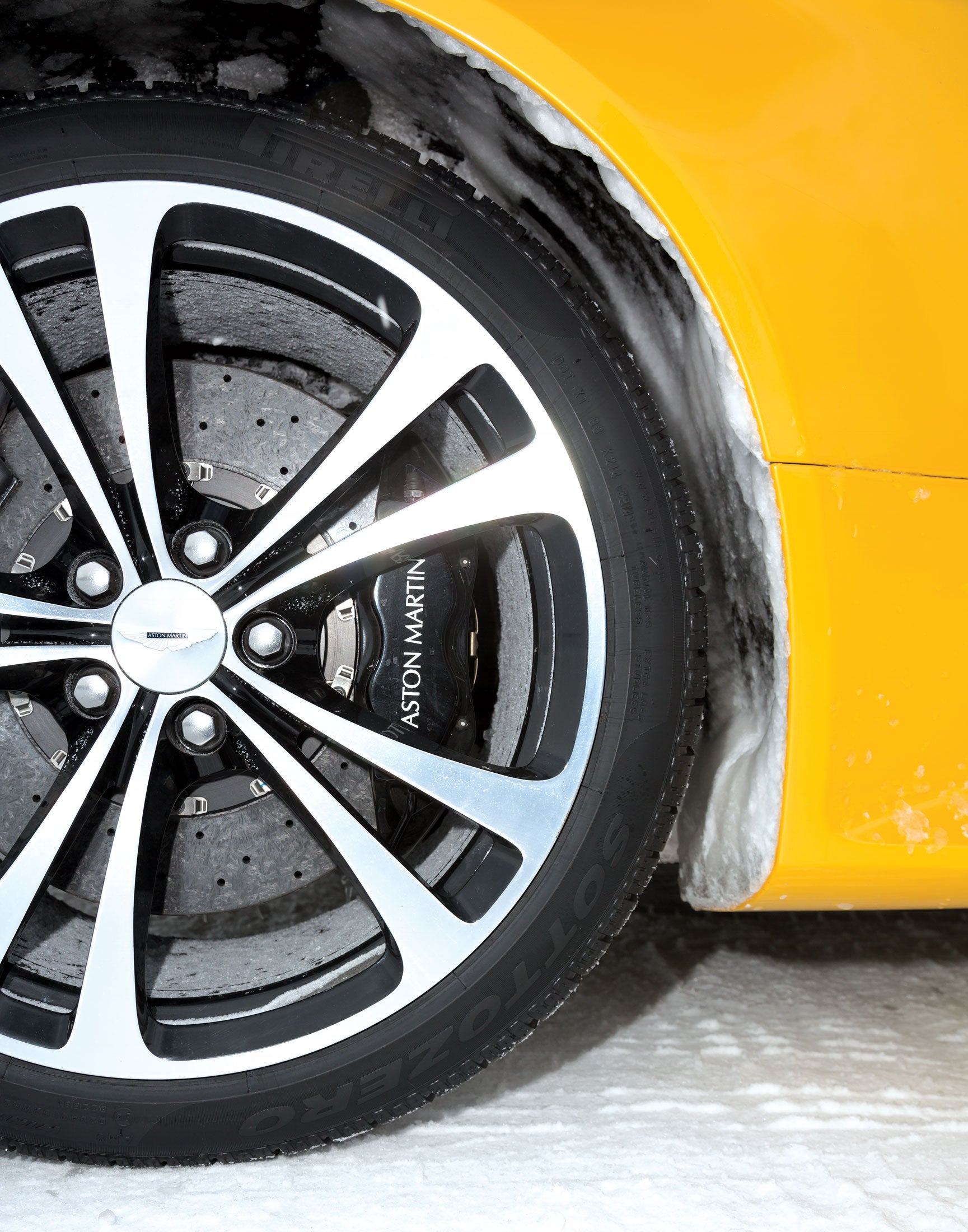
Standard snow tires on an Aston Martin

Drift Like James Bond at the Aston Martin Winter Driving School

A group of enthusiastic gearheads gathers in a yurt overlooking a vast Colorado snowfield. During breakfast by a warm, wood-burning stove, there’s a detailed briefing from a squad of expert rally car drivers. We step outside into a sea of white, ringed by dramatic mountain peaks, and crack open the wing doors on a fleet of 12 Aston Martin sports cars priced from $99,900 for the standard Vantage GT model to $284,995 for the Vanquish coupe. We buckle up, rev the engines to a growl, and soon enough are rocketing across the snow—drifting sideways at disquieting speeds, tires spitting ghostly clouds. It’s the first day of Aston Martin on Ice, a weekend-long program run by the brand each February, in which adventure seekers are schooled in the art of “winter performance driving.” For $10,000 (there’s also a cheaper, single-day option that runs $2,495), participants zip around a snowy expanse on the outskirts of the little mountain town of Crested Butte, cosseted by the sumptuous comforts of James Bond’s signature ride. “We’re going to give you a taste of the Aston Martin lifestyle,” says silver-haired, British-accented Julian Jenkins, president of Aston Martin the Americas. Jenkins himself looks like he could ably play a bespoke-suited superspy. “We’re going to share our passion with you,” he promises us. The weekend will include accommodations in privately owned, secluded mountain lodges and elegant meals with a regional focus—seared elk loin, Colorado chardonnay—all prepared on site by a chef who’ll happily take requests. But the time away from the track, however extravagant, is secondary. This weekend, Jenkins assures us, is all about the driving. The first hours of the school, which has a maximum of 24 pupils, are spent warming up with a slalom exercise, slowly snaking the cars between orange pylons placed in the snow. This alone is humbling. The tires on the Aston Martin Vanquish I’ve chosen are designed expressly for winter conditions, yet they provide only a 10th of the grip tires typically generate on dry pavement. Accelerate at the wrong moment, and my wheels spin furiously on the snow, finding no traction. Steer too loosely, and my car slides off the course. After a couple of runs, we try swerving into corners. The instructors have us gun it up to 50 miles per hour on a straightaway, gas pedal slammed to the floor, then abruptly hit the brakes. (We’re alone in the cars, but each is equipped with a walkie-talkie, so spotters can issue commands and offer instant feedback.) It feels death wish-y to purposefully skid on snow with my car moving that fast, but with a bit of practice I’m able to maintain decent control. As the curve approaches, with the car already skidding, I nudge the steering wheel to coax the Vanquish into a sideways drift. Once I swivel into the turn and get my tires pointed straight again, I hit the gas to accelerate into the next stretch. The “skid pad,” a circle marked out on the ice with an orange cone at its center, is where we practice the fine art of ripping doughnuts. We drive in the tightest circles possible at the fastest speeds we’re able to. After a few turns, my car inevitably twirls out of orbit. The resulting disorientation is terrifying, as we’re used to associating a loss of steering control with imminent disaster. The temptation is to panic and steer harder, jamming the wheel in a futile attempt to wrestle the car into submission. But, as instructors demonstrate, the wiser technique is to let the wheel unwind, wait for my tires to regain traction, and ease the car back onto its path with more subtle steering. An Aston Martin Vantage GT coupe near Crested Butte, Colo. The next phase that morning combines these newfound skills in a timed trial—a short slalom followed by three tight right turns to a finish line. I clock the second-quickest finish in my group, just under 40 seconds. Which shocks me. I thought I’d been too cautious, but my humility worked in my favor. Head instructor Paul Gerrard, a professional race-car driver for more than 20 years, praises my smooth, measured approach. “You weren’t cocky out there,” he says. “You had respect for the surface. Some of the other drivers were overconfident and pushed their cars too hard, which cost them.” Then Gerrard informs me that a pro driver could have shaved at least eight seconds off my time. Lunch is back inside the yurt, where we’re seated at shared tables with a view of the craggy Crested Butte mountainside beyond the door. We all introduce ourselves and recount our hairiest personal moments out on the track. “I have a need for speed,” says Dianne Baker, one of my tablemates. She’s a 70-year-old grandmother of four who lives much of the year in Tuscaloosa, Ala., and spent 25 years as a professional pilot flying corporate jets—including 737s—before she retired. In her spare time she flew homemade, experimental aircraft designed to handle advanced rolls and spins. Now she gets her kicks mostly from cars. She owns a 1970 MGB and a Porsche 911 that she bought in 2007. “The acceleration is the fun part,” she says, eyes glimmering after a full morning of high-speed hijinks. “It’s the same feeling you get in a jet.” Also at my table are Daryl and Scott Mercer, a father-son duo. Daryl, 61 and “in the rare coin business,” seems to view the outing mostly as a bonding experience. Scott, 28, the chief executive officer of a startup in San Francisco that makes electric-car charging stations, is the more dedicated motorhead of the two. He owns a ’71 Alfa Romeo and an ’87 Mercedes-Benz AMG Hammer, among other intriguing vehicles. “I watch too much Top Gear,” he acknowledges with a grin. Out on the course, he had cheekily lowered the top on an Aston Martin DB 9 convertible, even as flurries of snowflakes floated past the windshield. Myron Goforth, the 60-year-old owner of a Texas oilfield leasing company, brought along two of his workers as a sort of employee thank-you. “They do a lot of driving to meet clients in bad winter weather, in places like Wyoming and Pennsylvania,” Goforth says, “so practicing on this snow and ice also seemed like it could be a good safety course for them.” In fact, winter driving instruction is more firmly rooted in safety than in goofy, off-duty fun. The Bridgestone Winter Driving School, down the road in Steamboat Springs, Colo., has operated for more than 30 years and was the first of its kind in the U.S. In addition to ordinary folks who want to learn to drive more safely in bad conditions, the school’s clientele includes law enforcement, the military, and fleet drivers for delivery and utility companies. Its tracks host ambulances, fire trucks, and Humvees, all careening around on ice. “Some people need to go fast no matter how slippery it gets,” says Mark Cox, the school’s director, “and we can make that happen.” Carmakers such as Audi, Bentley, and Porsche host similar courses to burnish their upscale cred—the trips often include luxe accommodations and gourmet feasts—and sometimes snag a few individual sales through low-pressure tactics. “There are no dealers here,” says Aston Martin’s Jenkins. “Instead, people get to engage with the rally car drivers, with company executives, and with like-minded enthusiasts. They experience the cars together and feed off each other’s excitement. There’s an atmosphere of camaraderie.” Jenkins says about 30 percent of customers of the programs already own at least one Aston. Some treat the events as elaborate test drives and end up buying a model they’ve fallen in love with. Aston Martin, a more than 100-year-old company, has long possessed a certain ineffable cool. It has its British heritage. It’s known for the distinctive roar of its engines. Its cars have been outfitted with rockets and ejector seats in Bond films dating back to 1964’s Goldfinger. Prince Charles received an Aston Martin as a gift from his mother as a young man and passed the vintage model on to his son, Prince William. Yet Aston Martin remains a boutique brand, with global sales of about 4,000 cars a year. Every buyer counts. After lunch, the instructors prep us to take laps at full speed on the twisting 1.1-mile track. Gerrard first explains how to find the ideal path to take in any curve. An “out-in-out” arc lets a driver enter the turn wide, almost clip the inner edge of the curve at its most acute point, and then exit wide again, minimizing the amount of steering, which creates drag. Gerrard also gives tips on how to “manage the transitional energy.” Aston Martins are rear-wheel drive but have fairly even front-to-back weight distribution. One of the stated missions of Aston Martin on Ice is to convince potential customers that rear-wheel-drive cars are not ill-suited to winter conditions. “This is not a fair-weather ‘occasion car’ that you need to garage for half the year,” Jenkins says. When we tap our cars’ brakes at high speed, the weight of the car seems to surge forward. Our goal is to channel this momentum into a controlled, sideways slide. The bigger the Aston Martin we’re riding in—such as the four-door Rapide, which boasts the widest wheelbase—the more exaggerated the weight transition. The last bit of advice centers on the danger of “target fixation,” which happens when you stare at a spot you’re hoping to avoid (say, the outside bank of a turn) and, because the human brain is wired this way, you’ll steer directly for the hazard. The key is to instead focus up ahead on the track, where you want to go, and not on the obstacle you fear. Another vital point: We’ll need to recognize where the snow on the track has been already polished into hard-packed ice. The areas with less-trammeled powder provide much better traction, if we can identify them mid-lap and adjust. “Seeking the grip,” as Gerrard terms it, is the winter driver’s constant battle. As we buckle into the cars and launch back onto the track one at a time, we’re told to begin with a slow lap and then open the throttle a notch with each ensuing go-round. We’re encouraged to see how far we can push the cars, and our own nerves, before reaching a place of discomfort or spinning out in a burst of glory—whichever comes first. I feel in control on my first couple of leisurely jaunts around the loop. I’m enjoying the soft leather of the car’s cabin, its heated seats, its ergonomic pleasures. I’m tempted to simply sit back and watch a fleet of these 500-horsepower objets d’art flow across the snow. But this is not a day for laid-back leisure. I resolve to drive faster, and then faster, attacking the curves aggressively at 60 mph. I experience what Gerrard calls “the nirvana of four-wheel drift,” in which the entire car shuffles gracefully sideways in a high-speed dance. I’m confident at every tricky point on the course. Except Turn 5. Aston Martin spent months building this track, and it’s designed to challenge us with shifting elevations. In the particularly nasty fifth turn, the track falls steeply away just before we have to scramble back uphill toward the higher tier at Turn 6. “The camber works against you,” Gerrard explains to us in the yurt, tracing Turn 5 on a course map affixed to the wall. Again and again, I approach Turn 5 thinking I’ll nail the proper path and compensate for the incline. And every time I find my car sliding hopelessly down the embankment, with me powerless to arrest the descent. Meanwhile, I can hear accolades coming over the walkie-talkie for other drivers who’ve managed to get it right. “Very nicely done!” comes the shout of an instructor complimenting the driver behind me. Still, after several laps, I begin to fancy myself a pretty decent winter driver. I decide now is the moment to see what will happen if I push myself not merely to the edge but a little beyond. I lunge into turns at 70 mph, which, on the ice, feels like 150. I whip the car around so fast I can feel the rear wheels fishtailing up alongside me. At one point, I stomp on the gas so hard coming out of a turn that the car erupts in violent, sideways shudders. “That’s a tank slapper!” a spotter laughs into my radio, using a motorcycle racing term to describe the sideways oscillations that cause a bike’s center-mounted gas tank to slap the rider’s crotch. It’s all delightful fun, but I feel relieved to dial things back on the next lap. Others continue to push further: We’re forced to take a short break when someone “got a little adventurous in a corner,” as Gerrard puts it, which means the car has to be dislodged from a shallow snowbank. Later we swap cars so each of us can try the various entries in the product line. My unexpected favorite is the $204,995 Rapide S coupe, a hefty, dignified touring car that turns like an aircraft carrier when I slide it around on the snow. Gerrard takes the wheel and brings me along on a “hot lap,” during which he effortlessly drifts the car sideways at 80 mph, instead of the wussy 60 mph I’d managed. “Are you in the market for one of these?” I ask Baker, the jet pilot grandma, when I notice the mischievous look on her face as she emerges from her car after a maniacal lap. “Test drives can be very expensive,” she says with a big smile. Via: http://www.bloomberg.com/features/2015-aston-martin-winter-driving-school/

Contact Us

Fill out this form below and we'll contact you shortly
*Required Fields